Ho tenuto quello.
Abbiamo lasciato il porto alle 5:40.
Il sottomarino attraversò il canale nell’oscurità, superando le luci delle piccole comunità sparse lungo la costa.
L’acqua era abbastanza calma da far sembrare il movimento quasi del tutto ordinario.
Mentre ci dirigevamo verso il mare aperto, gli ultimi elementi familiari del Puget Sound scomparvero gradualmente alle nostre spalle.
Due giorni dopo, in acque profonde, il capitano diede l’ordine di immergersi.
La Louisiana sprofondò sotto le acque grigie del Pacifico.
La luce della superficie scomparve sopra la nostra testa.
Da quel momento, il nostro mondo si ridusse al sottomarino, all’equipaggio, al turno di guardia e a qualsiasi informazione ci giungesse attraverso i canali autorizzati.
Sono tornato a dedicarmi alle mie mansioni.
C’erano ispezioni, controlli di routine, rapporti da esaminare, problemi da risolvere e marinai da supervisionare.
Avevo imparato molto tempo prima che una lunga pattuglia diventa gestibile quando ci si concentra sul compito che si ha proprio davanti.
Per i primi nove giorni, non ho ricevuto alcun messaggio personale.
Non ero preoccupato.
Non era garantito che i Familygrams arrivassero secondo un determinato programma; il sistema di comunicazione funzionava in base alle esigenze della nave, non in base alle aspettative dei marinai che attendevano notizie dalla loro famiglia.
Poi, alle due del mattino del nono giorno, il sottufficiale Reyes comparve alla porta della sala ufficiali.
Portava con sé un foglio di carta piegato.
«Familygram, XO. Sono entrato in collegamento durante la trasmissione».
L’ho accettato, l’ho srotolato, ho letto la prima riga e poi ho appoggiato il palmo della mano sul foglio.
Dopo che Reyes se n’è andato, sono rimasto al tavolo per molto tempo.
A familygram isn’t an impressive-looking document.
It comes from a printer in the radio room, usually in capital letters, with identifying information and communication codes above the message.
The personal section is short because the system limits how much can be sent.
I had told Ryan forty to fifty words.
He had used every word he could.
I unfolded the paper again.
I can still repeat the message without looking at it.
“LORIE. DAY NINE. STORM OVER THE HILLS TONIGHT. SAT ON BROOKS PORCH AND COUNTED. GOT TO MILE AND A HALF. GENE SAYS YOU ARE SOMEWHERE BELOW ALL OF IT, KEEPING THE LIGHTS ON. GRANDMA MARLEY SAYS EAT. BROOKE SAYS SAVE A DANCE IN MAY. I SAY COME UP. RYAN.”
There was no apostrophe in Brooke’s name.
The communication system had removed punctuation.
There was no apology at the end.
No explanation of the seven years.
No attempt to make the message sound grander than it was.
Ryan had listened to what I’d asked him in the coffee shop.
No bad news.
Just write.
He had written about the weather.
I read it several times, especially the part about the storm over the hills.
He’d sat on Brooke’s porch and counted the seconds until thunder came.
He’d reached a mile and a half.
Seven seconds.
The same count we had made together when I was sixteen and he was fourteen, sitting on our father’s porch after the deputy brought him home.
I remembered his shoulder against mine.
The rain moving across the yard.
Dad somewhere inside, still disappointed but waiting for us to come in.
I had kept that memory for more than twenty years.
Ryan had kept it too.
For seven years, we’d lived as though the other person had abandoned that part of our lives.
But the memory had remained with both of us.
I folded the familygram along its original crease.
Then I placed it in the breast pocket of my coveralls.
It rested over my heart.
It was a sentimental thing to do, and I did it anyway.
Afterward, I returned to the watch bill.
The sailors scheduled for the next day still needed their assignments. The boat would continue moving through the ocean whether my brother had written to me or not.
That was one of the things I loved about the work.
It gave difficult feelings somewhere to settle while ordinary responsibilities continued.
At three in the morning, I walked forward to the control room.
The lighting was dim and red. Equipment hummed softly, and the watch team moved with the familiar restraint of people who knew that unnecessary noise didn’t improve anyone’s work.
A young lieutenant named Pash was bent over the navigation plot.
The planesmen sat at their stations, hands ready on the controls.
Beyond the compartment, a sonar operator listened through headphones to the sounds of the surrounding ocean.
Nobody there knew that anything unusual had happened.
In a practical sense, very little had happened.
A short message had traveled from a family in Spokane to a submarine beneath the Pacific.
There had been a storm.
My brother had counted the thunder.
One word had lost its apostrophe.
Yet the folded paper in my pocket felt heavier than its few grams should have allowed.
I stood near the back of the control room, one hand resting on an overhead rail, letting the familiar vibration of the boat move through my palm.
For years, Ryan and I had believed different versions of the same loss.
He thought I had chosen to leave Dad.
I thought he had chosen to leave me.
Entrambi avevamo dedicato così tanto tempo a difendere il nostro dolore personale da smettere di chiederci quale fosse stata, in realtà, l’esperienza dell’altra persona.
L’uomo che alla fine cambiò tutto non era né uno dei nostri cugini né un vecchio amico di famiglia.
Era un anziano capo in pensione, con un berretto blu ormai sbiadito, che aveva abbastanza pazienza da porre una domanda semplice.
Dove eri di stanza?
Ascoltò la risposta.
Ciò lo portò a porsi un’altra domanda e, alla fine, la storia che avevamo entrambi custodito per sette anni si trasformò in qualcosa che nessuno dei due poteva più ignorare.
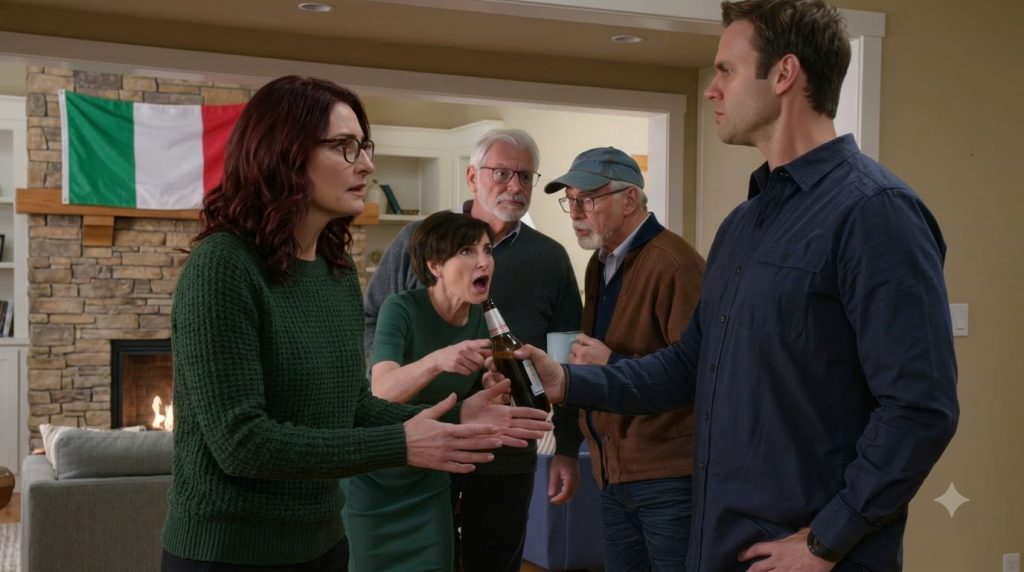
Ho pensato alla cena di fidanzamento.
Ryan in piedi accanto al camino con la sua birra in mano.
La mano che nessuno aveva mai preso.